Black and grey has nowhere to hide
Colour gives you somewhere to hide. Black and grey does not. Every edge, every texture and every bit of depth has to come out of value alone — how dark, how soft, how much contrast. It is the most honest test of whether an artist can actually draw, and it is the style that survives longest in Miami.
Request a session →-
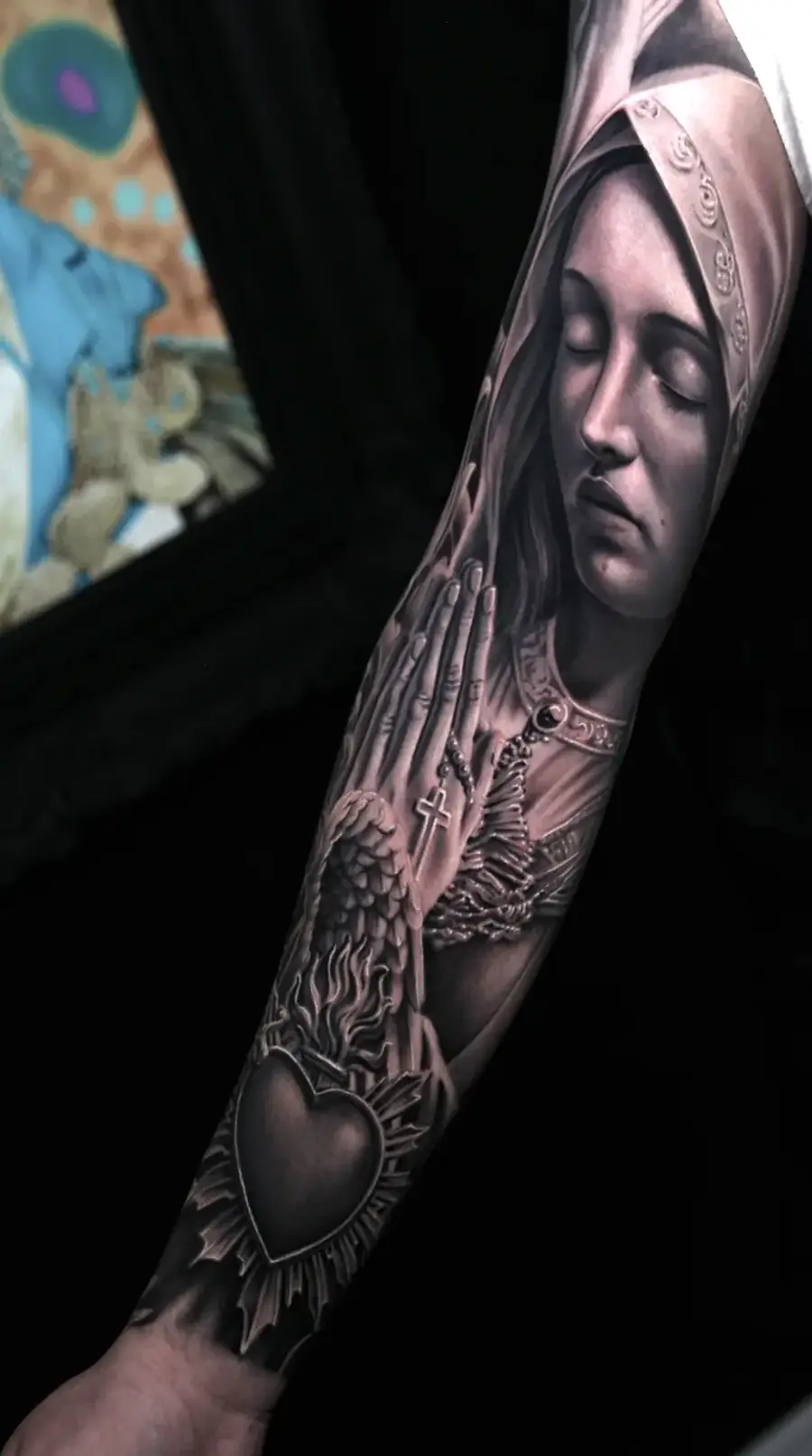
Mother
A full sleeve carrying a face, praying hands, a rosary and a sacred heart without a single one competing with the others. The wrist is the darkest point on purpose — it anchors everything above it.
-
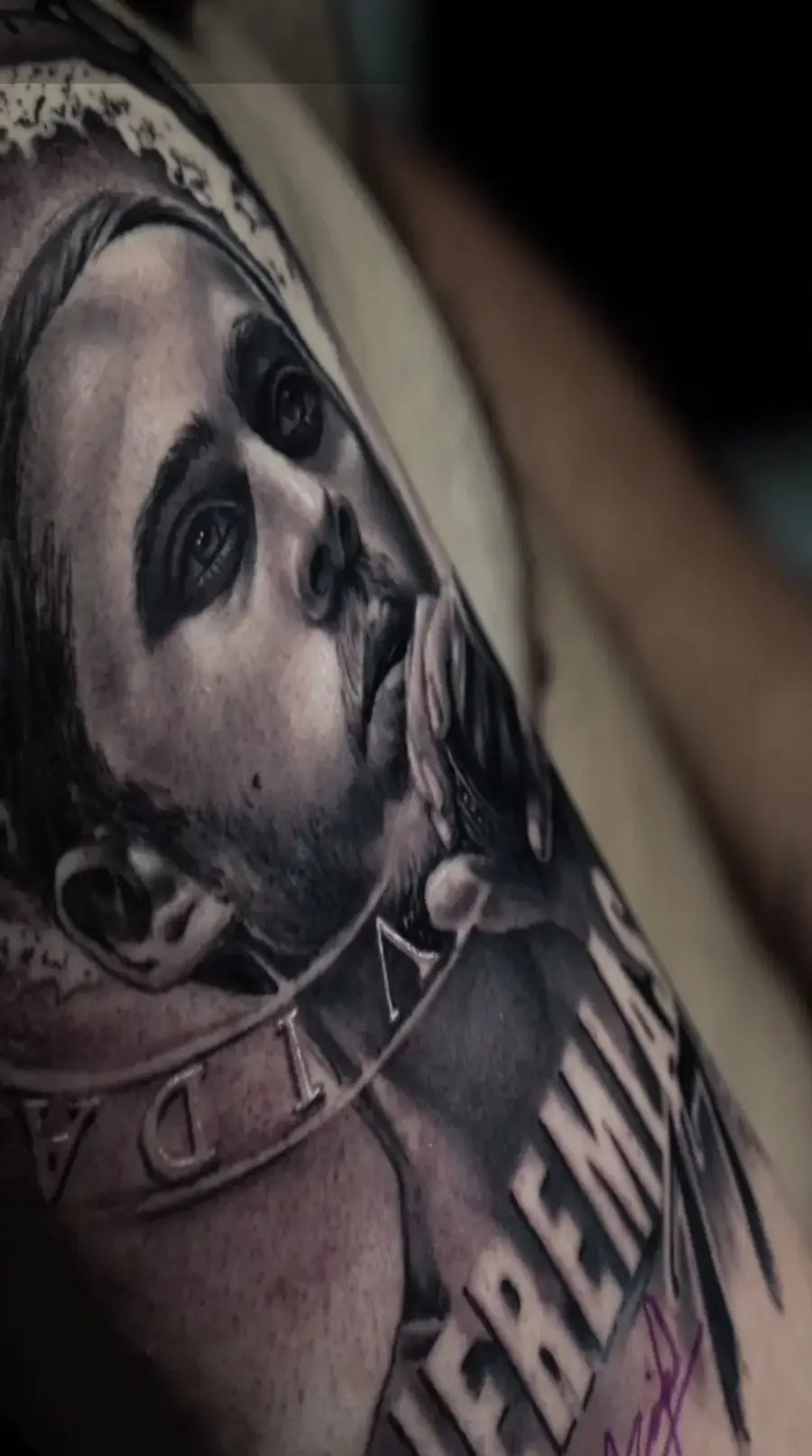
Canserbero / Life
A portrait of a real person, which is the highest-risk thing you can ask for. Likeness sits in millimetres — the distance between the eye and the brow, the exact softness under the cheekbone. A few degrees off and it stops being him.
-
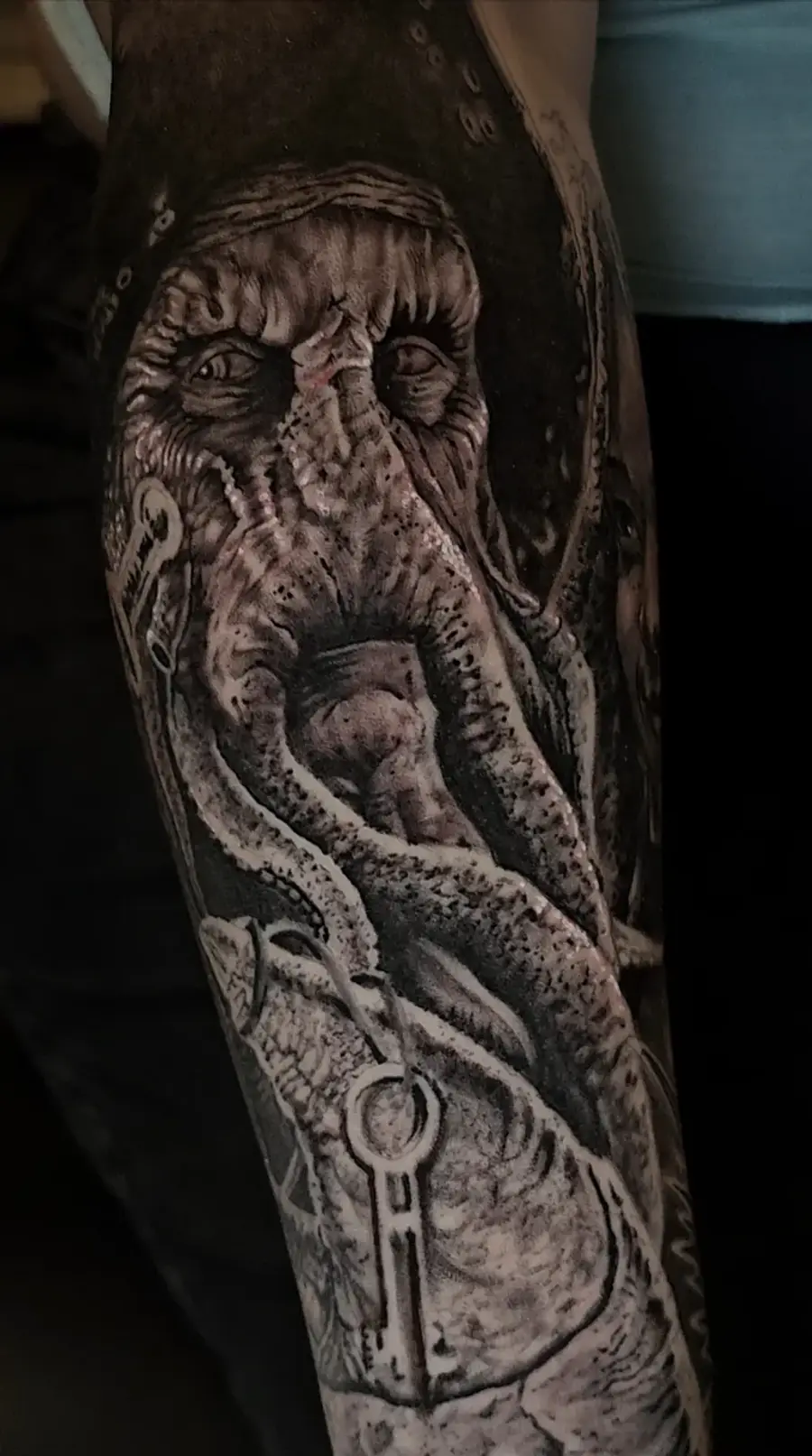
Davy Jones
Texture as the whole subject. Tentacles, barnacle, wet leather, corroded metal — four different surfaces that all had to read as different using nothing but grey.
-
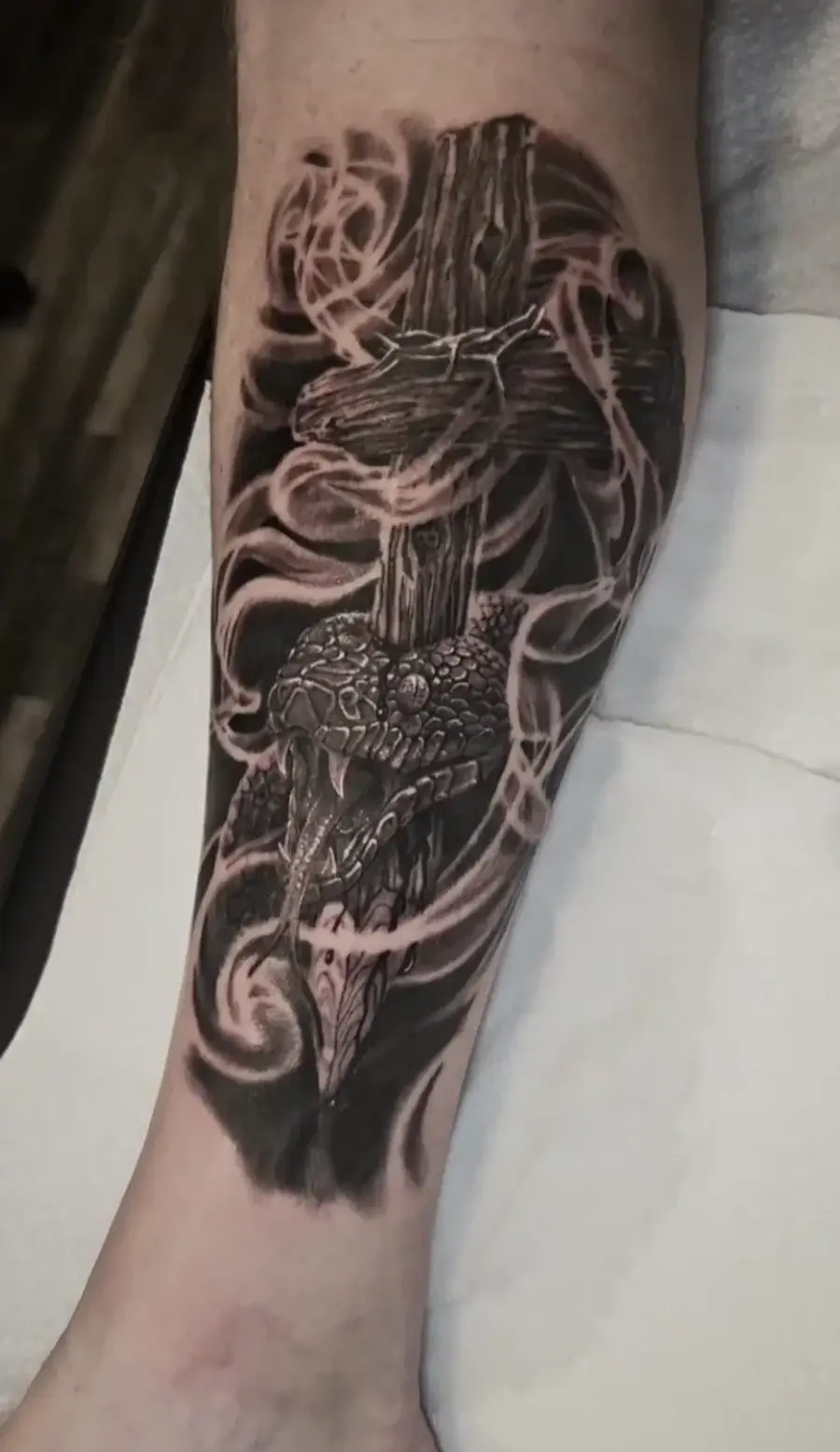
Serpent & Cross
Smoke is the hardest thing to render in black and grey because it has no edges. It works by being the softest thing on the arm, which is what makes the wood and the scales look hard.
-
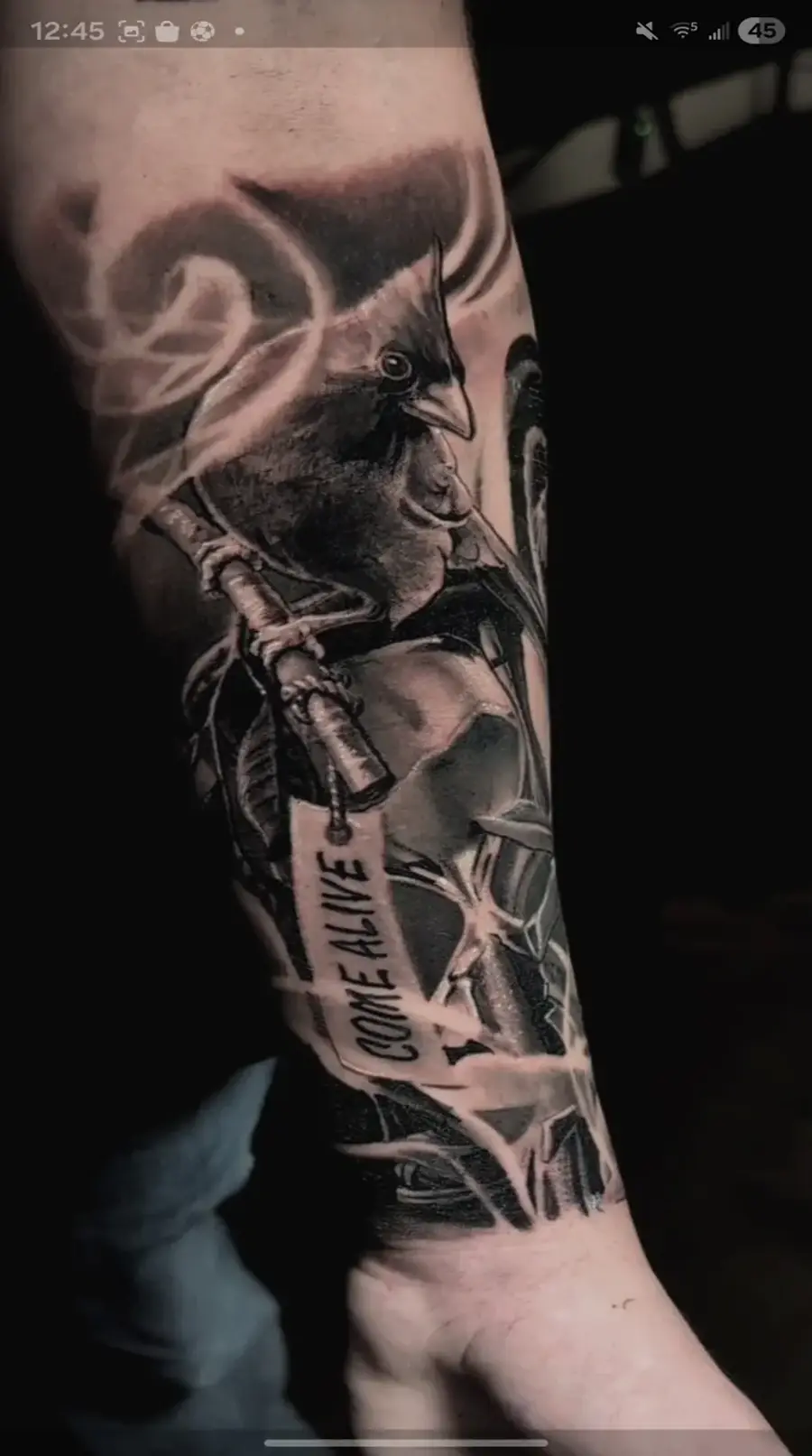
Come Alive
A bird carries almost no local contrast, so the depth had to come from what sits behind it. The dark field is not background — it is what pushes the cardinal forward.
-
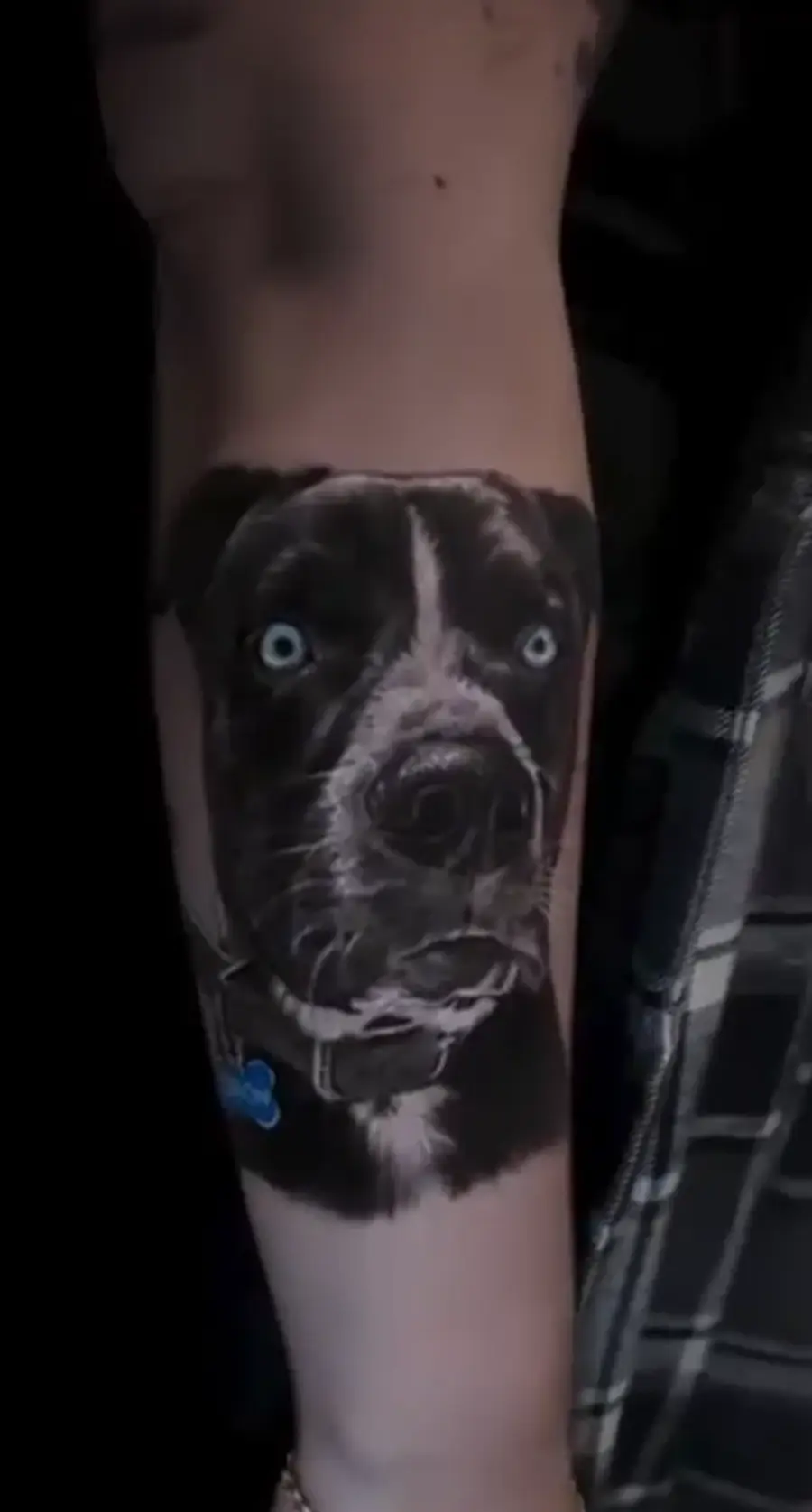
Pitbull
Mostly black and grey with two decisions in colour: the eyes and the collar tag. Restraint is the point. Two touches of blue read louder than a fully coloured portrait would.
Value is the only tool
Take colour away and you lose your easiest shortcut. A red can separate two shapes for you. In black and grey nothing separates anything unless you build the separation — dark against light, sharp against soft, busy against empty.
That constraint is why I like it. It forces every decision to be about structure, which is the part of my architecture background that actually transfers. Before I draw, I am deciding where the darkest point of the composition will sit and what it is anchoring, because everything else gets measured against it.
The common failure in black and grey is a piece that’s all mid-tone. It looks fine on the day. Six months later, once the tattoo has settled and softened, there is not enough range left and it reads as a grey smudge from across the room. Pieces need to be built with more contrast than looks correct on day one, because healing eats some of it.
It ages better here than anything else
I tell people considering colour work the honest version: colour pigments break down faster under UV, and Miami has a lot of UV. Black and grey does not escape that entirely, but it holds far longer, and when it does soften it softens evenly rather than shifting hue.
If your priority is a piece that still reads clearly in fifteen years with the least maintenance, black and grey is the answer. That is not me talking you out of colour — half my work is colour. It is me telling you which one asks less of you afterwards.
It still wants sunscreen. Everything does. The aftercare page has the full protocol.
Portraits, and being honest about them
Several pieces here are portraits, and two of them are memorial work. Portraits of animals carry the same demand, for the same reason. I want to be straightforward about what that involves.
A portrait is the only tattoo where “close” is a failure. A landscape that is slightly off is still a landscape. A face that is slightly off is a stranger, and if it is someone you have lost, that is not a small thing. Likeness lives in a few millimetres — the gap between the eyelid and the brow, the exact weight of the shadow under the lip.
Which means the reference decides the outcome before I start. I need the sharpest photograph you have, ideally with directional light rather than a flat phone flash. If the only photo that exists is a low-resolution snapshot, tell me. Sometimes the answer is to design around it — a composition that carries the person without depending on photographic likeness — and I would rather propose that at the consultation than fail at the other thing.
What black and grey suits
- Portraits and faces, human or animal.
- Religious and symbolic work, where the tradition is already monochrome and colour would fight it.
- Texture-heavy subjects — leather, stone, metal, smoke, feathers.
- Large-scale compositions that need to hold together across a whole limb.
- Anyone who wants the lowest-maintenance long-term result.
What it suits less: subjects whose entire identity is a colour. A scarlet macaw in black and grey is a bird. In colour it is a scarlet macaw.
Scale, sessions and what it costs
The technical answer is the same as for any of my work: a full session is six to seven hours at $1,500, starting at 11:00 AM, and that session is the minimum booking. Larger pieces run across several, and you will know the count before you commit to anything, because we set it at the free consultation.
The black-and-grey-specific part: this style tends to want more area than people expect. Value needs room to transition. A design that would work at palm size in bold linework often needs twice that in realism, because the softness between tones is where the realism actually lives. If I think your idea is too small for the style, I will say so at the consultation rather than take the booking and hand you something that closes up in a year.
The full step-by-step is on the process page.
Straight answers
Is black and grey cheaper than colour? No. Same session rate. Colour sometimes takes more passes to build saturation, so a colour piece can need more sessions — but the hourly value is identical.
Does black and grey fade less? It holds contrast longer and it does not shift hue. It still lightens over decades, and it still needs sunscreen.
Can you do a portrait from an old photo? Often, but bring it to the consultation before you plan around it. The photo sets the ceiling, and I would rather tell you that up front.
Can black and grey cover an old tattoo? Sometimes — it depends what is underneath and how dark it is. That is covered on the cover-ups page.